


Protecting Your Child’s Future While Navigating Divorce
For many parents, one of the most emotional questions during a divorce has nothing to do with the division of property. It’s often how they can continue providing the opportunities they have always envisioned for their children.
College planning is often a significant part of this future planning, particularly for families who have spent years saving and preparing for their child’s higher education. Because Maryland law does not automatically require divorced parents to pay for college expenses, thoughtful planning during the divorce process can help avoid future uncertainty and preserve your child’s future.
Key Considerations for Maryland Parents
At Malech Law in Bethesda, Maryland, we understand that families facing divorce are not simply dividing assets. They are also redefining how they will continue supporting the people they love most. Our approach combines compassionate counsel with sophisticated legal strategy to help parents create thoughtful agreements that protect both their financial interests and their children’s educational futures.
When discussing college expenses during divorce, parents should consider:
- College expenses are not automatically covered by Maryland child support.
- Parents can include detailed provisions for higher education in their settlement agreement.
- Agreements may address tuition, housing, books, transportation, and other educational costs.
- Planning ahead can reduce future conflict and provide greater certainty for your child.
- Complex financial situations often require customized legal strategies.
Can Maryland courts require divorced parents to pay for college?
Unlike child support, Maryland courts generally do not require parents to pay for a child’s college education after they reach adulthood unless the parents have agreed to do so as part of their divorce or separation agreement. If college and higher education are a priority for your family, it is vital to address these educational expenses during settlement negotiations.
What college expenses should parents discuss during divorce?
Every family has different priorities, but many settlement agreements include provisions for:
- Tuition and mandatory fees
- Room and board
- Books and required technology
- Transportation
- Study abroad opportunities
- Graduate school considerations
- How scholarships, grants, and financial aid can affect each parent’s contribution
Families with substantial assets or complex financial circumstances can minimize the potential for disputes down the road with detailed agreements that anticipate future changes.
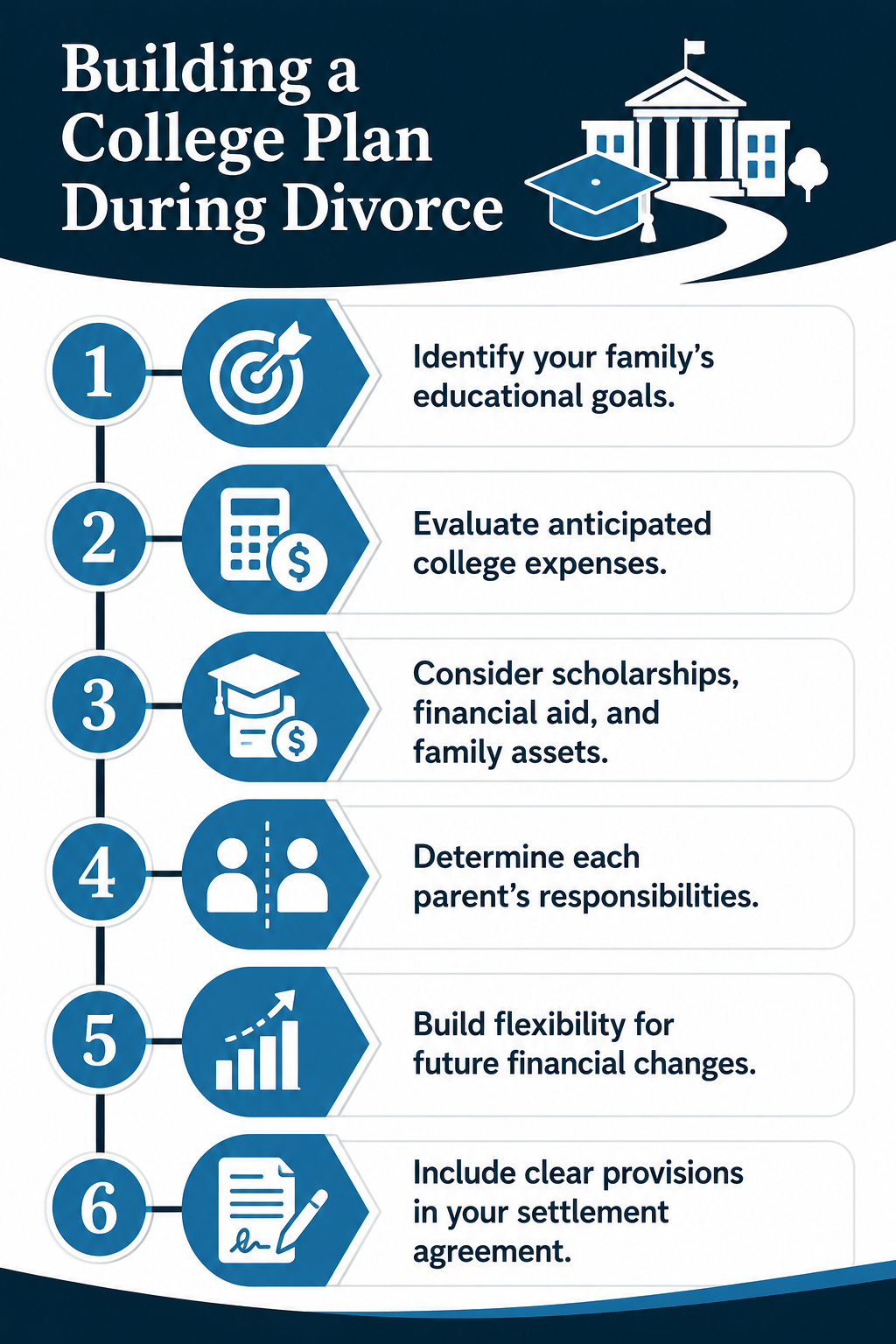
Every family’s circumstances are different, and there is no one-size-fits-all approach to planning for college after divorce. Whether you are navigating a high-asset divorce, negotiating a settlement, or working through complex parenting and financial decisions, thoughtful legal guidance can help you create an agreement that protects your children’s futures.
At Malech Law, we understand that divorce is about more than resolving today’s legal issues. It’s about helping clients build a secure foundation and peace of mind for the future. By proactively addressing college expenses during the divorce process, parents can reduce uncertainty, protect important educational opportunities, and move forward with greater confidence, knowing they have taken meaningful steps to support their children’s success.